Custom Shopify Design for Beauty Brands: What Makes a Store Actually Convert
E-commerce, Shopify, Ux/ui Design
Jun, 20 2026
Custom Shopify Design for Beauty Brands: What Makes a Store Actually Convert
Beauty is one of the most competitive categories on Shopify, and also one of the most forgiving of generic design, until it isn’t. A store can look polished and still lose sales for reasons that have nothing to do with aesthetics: a shade selector that confuses instead of guides, product photos that don’t answer the one question a buyer actually has, a checkout that adds friction at exactly the moment someone was ready to buy.
A beauty store converts better when it solves three specific problems that generic Shopify themes weren’t built to solve: shade and color uncertainty, ingredient trust, and mobile checkout friction. This article breaks down what that actually looks like, with real examples from beauty brands we’ve built for.
Why Beauty E-Commerce Has Unique Design Demands
Most product categories sell on function. Beauty sells on a combination of function and a very personal kind of uncertainty: will this shade match my skin, will this work for my hair type, does this ingredient list mean what the brand claims it means.
That uncertainty is the design problem to solve. A generic Shopify theme treats a lipstick the same way it treats a phone case: image, title, price, add to cart. Beauty buyers need more resolution than that before they’ll commit, and themes aren’t built to provide it by default.
Product Imagery: Decisions That Make or Break Conversions
Hero Image vs. Lifestyle Context
The instinct with beauty photography is to lead with lifestyle: soft lighting, a model, a mood. That’s valuable, but only after the product itself has been shown clearly. Baymard Institute’s research on cosmetics product pages found that showing a cosmetic product on a human model, not just as an isolated swatch, is necessary for shoppers to judge color and fit accurately. Skipping that step and going straight to mood photography leaves buyers without the specific visual information they need to decide.
The sequence that works: a clear product shot first, a true-to-life shade or texture shot second, lifestyle imagery supporting the story after that.
Shade and Variant Selectors That Don’t Confuse
This is where most beauty stores quietly lose customers. Baymard’s usability testing on cosmetics sites found that shoppers frequently abandon a purchase when they can’t confidently match a shade, and the problem is worse on mobile, where shade detail and product imagery are often separated on screen. A shade finder or clear variant preview isn’t a nice-to-have add-on. It’s the difference between a confident purchase and a closed tab.
Standard theme variant pickers are built for generic options like size or color in apparel. They weren’t designed to solve the specific anxiety of “will this match my undertone,” and it shows.
Ingredient Storytelling: Where Most Brands Get It Wrong
Ingredient lists are usually treated as a compliance afterthought: a small accordion at the bottom of the page, dense with names nobody outside a chemist will recognize. That’s a missed opportunity, not a formality.
Beauty buyers increasingly research ingredients before buying, and a brand that explains why an ingredient is there, not just that it’s there, builds the kind of trust that converts hesitant browsers. This doesn’t need to be a wall of text. It needs structure: what it is, what it does, why it’s in this specific product. A theme’s default product description field handles that kind of structure badly, because it wasn’t designed for it.
Mobile-First Checkout for Impulse Categories
Beauty purchases skew impulse, especially when they’re driven by social discovery. Industry data on mobile commerce shows that impulse purchases account for the majority of mobile commerce transactions, and beauty is one of the categories that drives the highest volume of mobile social commerce. The checkout flow has to be built for a buyer who decided in seconds and can change their mind just as fast.
Checkout research backs this up directly: mobile cart abandonment runs well above desktop, with the gap driven largely by form friction and screen constraints rather than price objections. For a beauty brand running paid social or influencer traffic, a clunky mobile checkout isn’t a small leak. It’s where a meaningful share of revenue disappears before it’s counted.
A custom-built checkout flow, the kind our UX/UI design process is built around, can cut form fields down to what’s essential, surface express payment options up front, and remove the structural friction that a generic theme checkout carries by default.
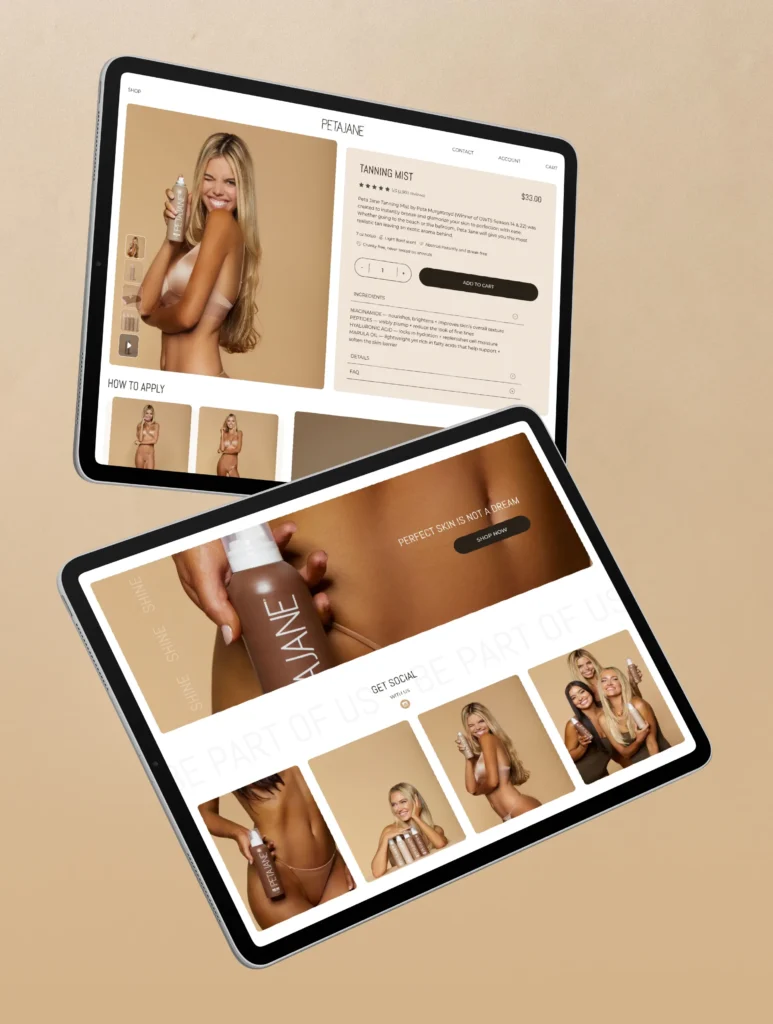
Peta Jane needed a store that matched the sensory, confident identity of the brand itself, not a generic beauty template. The build focused on high-converting product pages and a mobile-first experience built around how self-tanning customers actually research and decide. The result has translated into stronger traffic and steadier conversion since launch.
Responsive Shopify design for PetaJane, optimized for tablet and mobile, crafted by Split Development for enhanced usability.
Suntouched came to us on a basic site builder that limited both design and functionality. We rebuilt the store as a custom Shopify 2.0 theme from scratch, with a sleek, minimalist direction that matched the brand’s hair-lightening product line. The rebuild led to a 45% increase in conversion rate shortly after launch, along with a meaningful jump in site visitors and client acquisition.
Modern e-commerce design for Suntouched, showcasing hair care products with a clean and minimalist Shopify interface by SPLIT Development.
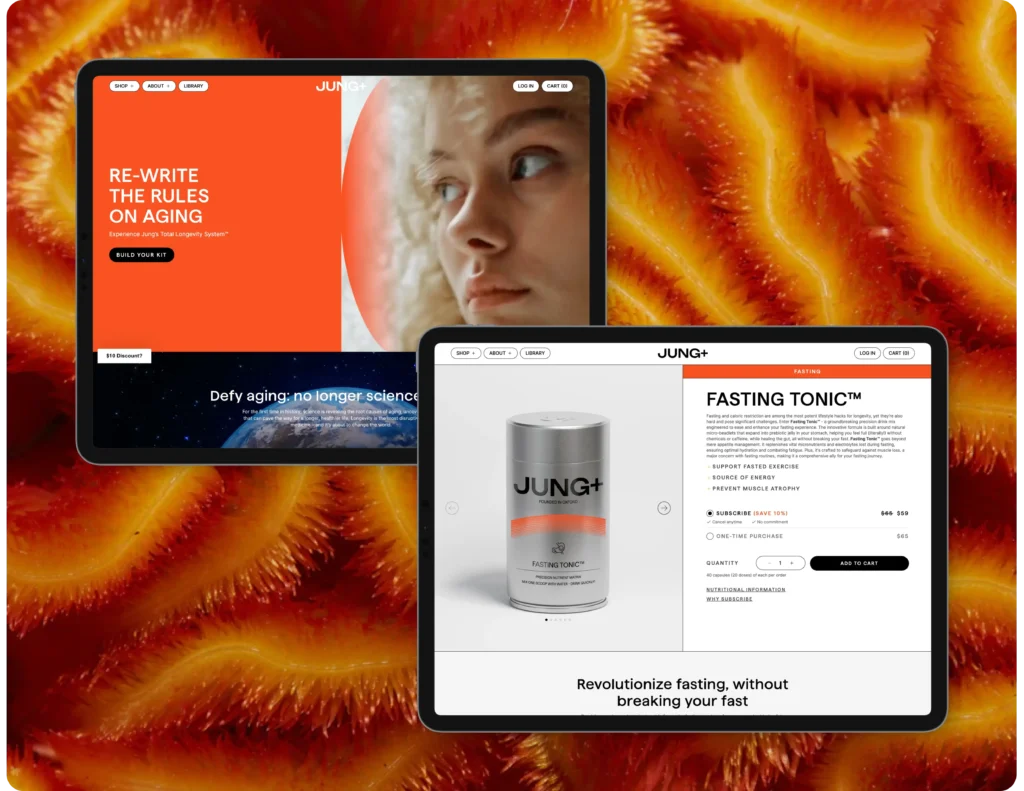
Jung’s product line needed more than a standard theme could support: one-time purchases, subscription options, and a referral and bonus system, all running on a fast, fully custom Shopify build. Standard themes weren’t equipped to handle that combination of commerce logic, so the site was built around it from the ground up, giving Jung a platform that scales with the brand rather than constraining it.
Modern Shopify design for JUNG+, showcasing cutting-edge products in the health and longevity industry, developed by Split Development.
Theme vs. Custom: What Beauty Brands Actually Need
Not every beauty brand needs a fully custom build on day one. A well-configured theme can carry a new brand through its first stretch of growth, especially if the product line is simple and the audience isn’t yet large enough to expose theme limitations.
The shift toward custom development tends to happen at a specific point: when shade or variant complexity grows, when subscription or bundling logic enters the picture, or when mobile conversion plateaus despite healthy traffic. At that point, the constraints aren’t cosmetic anymore. They’re structural, and custom Shopify development designed around the brand’s actual buying journey is what removes them.
If you’re trying to figure out which side of that line your brand is on, our Shopify web design agency portfolio shows what custom-built beauty and ecommerce stores look like in practice, and our team can walk through what a custom build would change for your specific store.
RUNNING A BEAUTY BRAND ON SHOPIFY?
Talk to a Shopify Design Specialist
We’ll look at your current store and give you an honest picture of what custom design would change, what it costs, and whether your brand has actually hit the point where a theme stops being enough.
No. Custom design and development are independent of which Shopify plan you’re on. Shopify Plus adds checkout customization, B2B features, and higher-volume infrastructure, but a fully custom storefront can be built on standard Shopify just as well. The decision to move to Plus is usually about volume and checkout requirements, not design capability.
How long does a beauty store build take?
A custom beauty store build typically runs 6 to 10 weeks from kickoff to launch, depending on catalog complexity, the number of shade or variant options, and whether subscription or loyalty features are part of the scope. Stores with simpler catalogs and no subscription logic land on the shorter end of that range.
What’s the biggest design mistake beauty brands make on Shopify?
Treating shade and color selection as a standard product variant instead of the central decision point it actually is. When shoppers can’t confidently tell how a shade will look on them, they abandon the purchase rather than guess, which is one of the most common and most fixable causes of lost sales in beauty ecommerce.
Should ingredient information be on the product page or a separate page?
On the product page, close to where the buying decision happens. Burying ingredient details behind a separate page or a generic accordion makes buyers work harder to find information they’re actively looking for, right at the point where they’re closest to converting.
Does a custom Shopify build help with mobile conversion specifically?
Yes. A custom build allows the checkout and product page to be designed around mobile behavior first, rather than adapted from a desktop layout. That includes fewer checkout form fields, prominent express payment options, and shade or variant selectors that don’t require zooming or scrolling to compare.
Can a beauty brand start with a theme and move to custom later?
Yes, and it’s a common path. Many brands launch on a well-configured theme to validate the product and audience, then move to custom development once shade complexity, subscription logic, or mobile conversion issues start limiting growth. The transition doesn’t require starting from zero; existing brand assets, product data, and content typically carry over into the custom build.