If you’ve spent any time researching Shopify design options, you’ve likely seen the phrase “theme development” used in three completely different ways. One person means installing a template from the Theme Store. Another means making small Liquid tweaks. A third means building a fully custom storefront from scratch. These are not the same thing, and misunderstanding the difference is one of the most common and expensive mistakes growing Shopify brands make.
This guide clarifies exactly what Shopify theme development means today, what changed with Shopify 2.0 and the Horizon framework, when marketplace themes reach their limit, and when investing in a custom Shopify theme is the smartest decision for your business.
What “Theme Development” Actually Means
The term gets stretched in every direction. Understanding the three distinct levels helps you make the right choice.
Installing a Theme vs. Customizing vs. Building from Scratch
Installing a theme means choosing a pre-built design from Shopify’s Theme Store or a third-party marketplace, installing it, and configuring it through the visual editor. This takes minutes to a few hours. Shopify’s free themes have become significantly more capable over time. The Horizon framework, launched in Summer 2025, introduced up to eight levels of nested blocks, global blocks that update site-wide from one place, AI-generated sections via Shopify Magic, and ten industry-specific design presets. For many new or small-catalog stores, a well-configured Horizon theme is a genuinely competitive starting point.
Customizing a theme means going beyond the visual editor: adding custom CSS, writing Liquid code modifications, and using app blocks to extend what the theme ships with. Most growing brands land here at some point. While faster and cheaper than a full build, heavy customization creates technical debt because you are still working inside someone else’s foundational architecture, with all the structural constraints that implies.
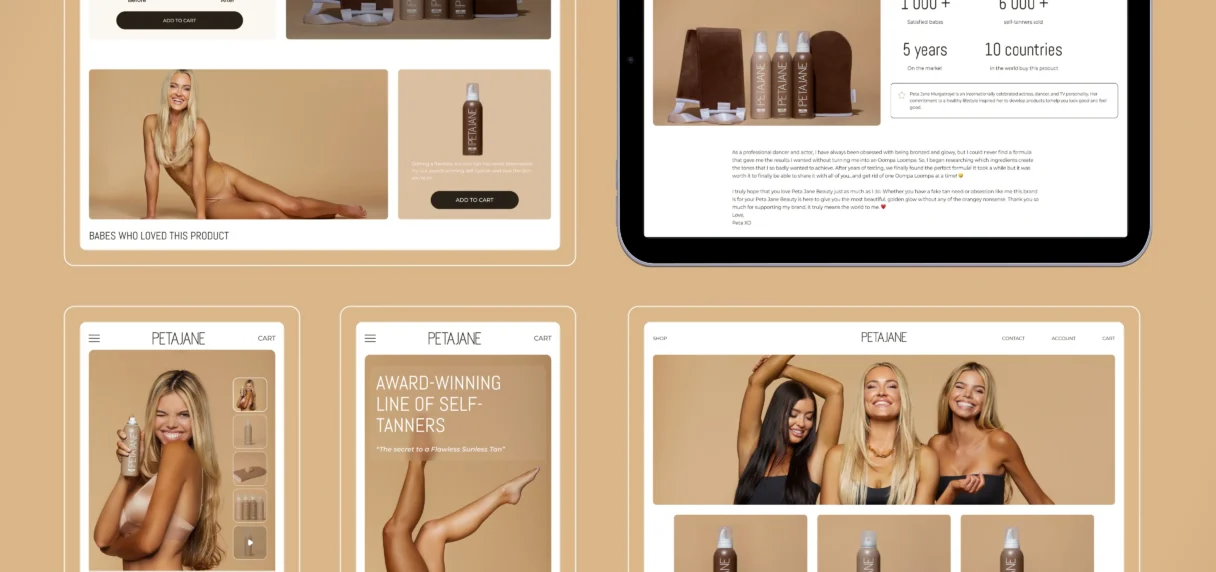
Building from scratch means a professional team designs and engineers every template, section, block, and interaction specifically for your brand. The result is a purpose-built storefront aligned with your customer journey, catalog structure, and business logic rather than adapted from a generic starting point. This is what serious Shopify theme development services actually deliver.
What Shopify 2.0 Changed for Theme Development
Shopify Online Store 2.0, introduced in 2021, replaced Liquid-only page structures with JSON templates, made sections available on every page type, and turned app blocks into a first-class concept. The Horizon framework took this further. Where OS 2.0 themes like Dawn supported two levels of block nesting, Horizon supports up to eight, enabling layout complexity that previously required custom code. The AI block generator lets teams create new content sections through a text prompt. Global blocks propagate design changes across the entire store from a single edit.
From a development perspective, these changes work in two directions at once. For stores with standard requirements, the gap between a well-configured Horizon theme and a custom build has narrowed. At the same time, the platform has raised baseline expectations across the board. In 2026, any professional custom Shopify theme must meet strict standards for Core Web Vitals performance, accessibility, and upgrade-safe code architecture. The floor moved up for everyone.
When Marketplace Themes Hit Their Ceiling
Marketplace themes are the right starting point for early-stage stores and straightforward catalogs. The problems surface as brands scale.
Performance bloat. Premium themes ship with code covering every possible use case, regardless of whether your store uses those features. That accumulation hurts load times in ways that matter commercially. Research from early 2026 found that custom themes perform 40 to 60 percent faster than template-based stores of equivalent design complexity, measured by Largest Contentful Paint. Custom builds regularly achieve 90-plus PageSpeed scores; heavily customized marketplace themes typically score between 60 and 75. On mobile, where users abandon slow pages faster, that gap translates directly to lost sales.
Lack of differentiation. When your store runs on a popular marketplace theme, competitors can replicate your visual presentation by purchasing the same template. For brands where customer experience and creative direction are part of the value proposition, this is a real problem.
Inflexible business logic. Custom subscription flows, B2B portals, product configurators, advanced checkout sequences, and non-standard discount logic are difficult to implement cleanly inside a marketplace theme’s structure. Developers working around these constraints typically produce fragile, hard-to-maintain code.
Maintainability debt. Every Liquid edit and CSS override applied to a purchased theme complicates future updates. When Shopify releases platform changes or a theme vendor pushes a major version, stores with heavily modified themes face a painful choice between staying on an outdated codebase or rebuilding their customizations from scratch.
Conversion architecture. A generic layout built for the widest possible audience is rarely optimized for how your specific customers make purchasing decisions. Data across 10,000-plus Shopify stores found that switching to a purpose-built, conversion-focused theme structure can lift conversion rates by 37 to 52 percent. The theme is not just a visual wrapper; it shapes the entire buying experience.
The investment threshold for a custom build varies by brand, but the calculation typically favors custom development when average order value is high, when business logic deviates significantly from a standard DTC catalog, or when you are operating at a volume where a two-percentage-point conversion improvement moves meaningful revenue.
What You Get With a Custom-Built Theme
Performance
A custom Shopify theme is built to load exactly what your store needs and nothing more. Developers make deliberate choices about JavaScript scope, image delivery formats, lazy loading, and render-blocking resources. The 2026 development standard leans toward minimal JavaScript, progressive enhancement so pages remain functional without scripts, and lightweight approaches like Web Components or Alpine.js. The practical outcome is faster page loads, stronger Core Web Vitals scores, and measurably better performance on mobile, where the majority of ecommerce traffic now arrives.
Design Ownership
A custom theme gives you complete visual and architectural ownership of your storefront. No competitor can replicate it by purchasing a template. The customer journey, the product presentation, the checkout flow, and every interaction is designed around your audience’s behavior rather than a generic shopping pattern. There is no vendor dependency, no risk of an upstream update overwriting your modifications, and no waiting on a third-party team to fix a bug that is costing you conversions.
Maintainability
Well-built custom Shopify themes follow the same development standards Shopify itself enforces: Theme Check compliance, version control through GitHub, Shopify CLI workflows, and a modular section and block architecture that makes future changes predictable. Marketing teams can manage day-to-day content through the Theme Editor without developer access. Structural changes and new feature development become well-scoped tasks rather than invasive workarounds.
How to Brief an Agency on Theme Work
The quality of your project brief directly affects the accuracy of the proposal and the quality of the outcome. A strong brief for custom Shopify theme development covers:
- Current business metrics. Share your existing conversion rate, average order value, and traffic sources. The agency needs a baseline to build a meaningful roadmap.
- Design references. Provide Figma files if available, or a curated set of visual references with notes on what specifically appeals to you about each.
- Required functionality. List every non-standard feature: subscriptions, product configurators, B2B account management, multilingual requirements, loyalty integrations, anything that deviates from a standard DTC catalog.
- Technical requirements. Specify Core Web Vitals targets, accessibility standards, third-party integrations that must connect at the theme level, and any existing app stack constraints.
- Site structure and content plan. A theme built around your actual page types and navigation patterns outperforms one built to a generic template.
- Future growth plans. If you are planning new markets, a B2B channel, or significant catalog expansion in the next 12 to 24 months, those requirements belong in the brief now.
Include your preferred development workflow, timeline, and budget range. A professional Shopify theme development agency will follow up with scoping questions and return a phased roadmap with clear deliverables.
Real Examples: Before and After Custom Theme Builds
The pattern across custom theme case studies is consistent regardless of brand category.
DTC brands in fashion, beauty, and lifestyle that migrate from marketplace themes to custom builds typically see product page conversion improvements of 25 to 40 percent. The gains come from faster load times, tighter visual hierarchy, and checkout flows built around their specific abandonment patterns rather than generic ecommerce conventions.
Brands running significant paid or influencer traffic often discover that their marketplace theme’s mobile performance was degrading conversion rates at scale. A custom build that scores in the 90s on mobile PageSpeed performs differently for a customer on a 4G connection than a bloated theme that scores in the 60s.
B2B and subscription brands represent the category where the ROI calculation is most direct. When the core business model requires functionality that no marketplace theme supports cleanly, a custom build is not a premium option. It is the only path to a storefront that works the way the business needs it to.
The work at SPLIT Development spans migrations and custom builds across these categories, with performance and conversion outcomes measured through pre- and post-deployment analytics.